
SMED Theory
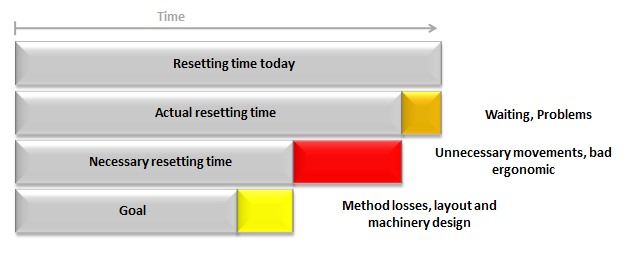
Why is it important to analyze the resetting /changeover process? – The answer is that most processes are vitiated with different types of waste. Evaluating a resetting process related to the time it takes can look like this:
Shigeo Shingo recognised eight techniques that should be considered in implementing SMED
-
Separate internal from external setup operations
-
Convert internal to external setup
-
Standardise method/function
-
Use functional clamps or eliminate fasteners altogether
-
Use intermediate jigs
-
Adopt parallel operations
-
Eliminate adjustments
-
Mechanisation
First, define the bottleneck machine and define when the setup actually starts and ends. Remember the end of the setup is when the first quality approved part leaves the machine. Then and first then is the resetting done!
Make a job/sequence breakdown in AviX (create tasks) and define what is actually part of the resetting? Then go on and classify internal and external work and move external work to be outside the downtime definition. Check the sequence if it could be done in a better way. (If possible make changes so internal work can be done as external, note that this requires some creative work and technical solution.) This could be the first step. You could stop now and create a changeover instruction and train this method with the operators.
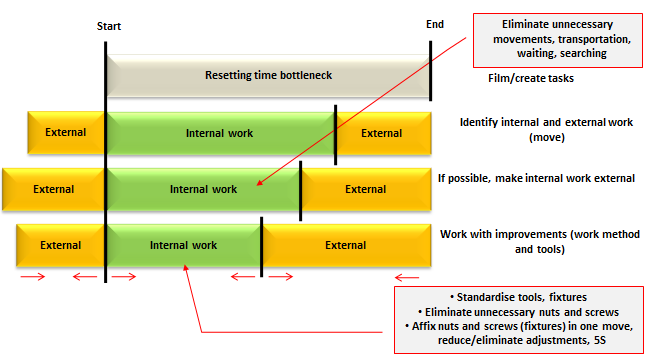
A s a second level of changes, work with all hard technical solutions, standardization of tools, eliminate adjustments etc. to reduce the internal and external time
This is merely a general description, the actual focus varies between different processes