
A CRITICAL JAVA (JDK) VULNERABILITY, Java4Shell, CVE-2026-114938
VULNERABILITY
CVE-2026-114938, also known as Java4Shell, is a critical memory-corruption vulnerability in the hardware-accelerated Base64 decoder in OpenJDK. Under certain conditions, it can allow remote attackers to execute arbitrary code in the context of a vulnerable Java application.
The vulnerability affects OpenJDK 17.0.6 and later versions, including subsequent Java release lines. Exploitation requires specific hardware conditions (x86-64 CPUs supporting AVX-512 VBMI) and an application that processes attacker-controlled Base64 input.
Oracle released security fixes on November 17, 2026. Other OpenJDK distributions may have separate patch schedules
Relevant reading: https://access.redhat.com/security/vulnerabilities/RHSB-2026-018
Affected versions
AVIX 5.1.0–5.1.19 use Java runtimes that may be affected by this vulnerability.
Actual exposure depends on the underlying hardware and runtime configuration.
Immediate remedy
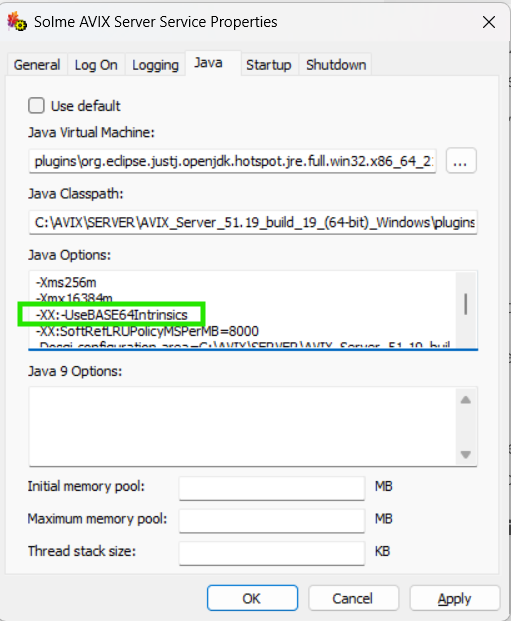
Add the following JVM option to disable the vulnerable hardware-accelerated Base64 decoder:
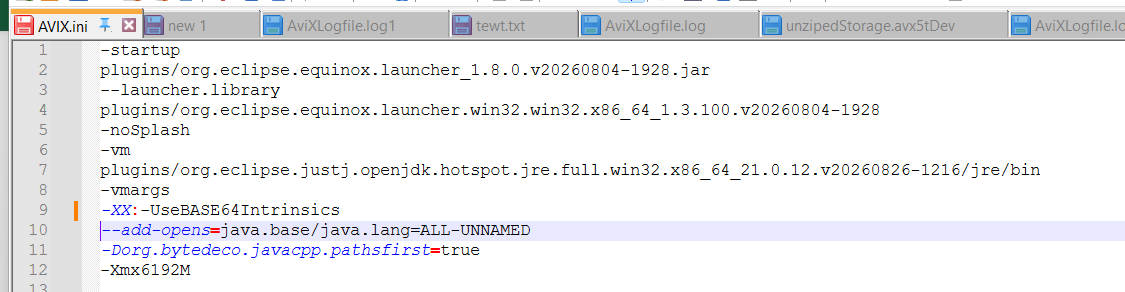
-XX:-UseBASE64Intrinsics
Apply the option to the relevant AVIX Server and AVIX Client installations and restart the affected applications.
This is an interim mitigation. We recommend applying the permanent Java security update when it becomes available through the relevant AVIX release.
AVIX Server (installed as windows service)
Using the "Solme AviX Server" Service manager Application, you can specify the JVM options.
In the /commons-daemon/ folder at the root of the AVIX Server installation, there is an application SolmeAviXServer.exe.
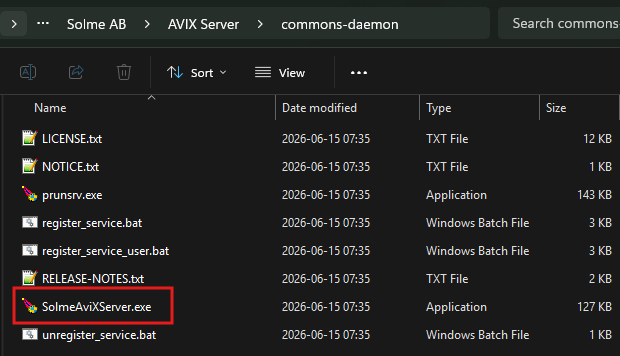
Run this application, you may will need to allow elevated access. Switch to the Java tab. Append the parameter:
AVIX (Client application)
In the root of the AVIX installation, there is an "AVIX.ini" file. Edit this, and add the argument as a VM argument:
Short term remedy
We are working to release AVIX5.1.20 that will use a fixed JAVA version.