
Server service: changing user account
The user account running the AVIX Server service provides the access permissions for the server. Local Service - the default account in use after registering the AVIX Server as a Windows service - runs with low privileges. This means that is will not have any access to network file resources.
Why change user account? If the server cannot access folders or drives containing linked files (movies, images etc), you typically need to run the server with another account with adequate permissions.
How to edit the account used to run the AVIX Server service
This can be done in multiple ways:
- Using the Windows Services application
- Using the SolmeAviXServer service manager application
Using the Windows Service Application
Open the Windows Services application and search for the service named "Solme AVIX Server Service".
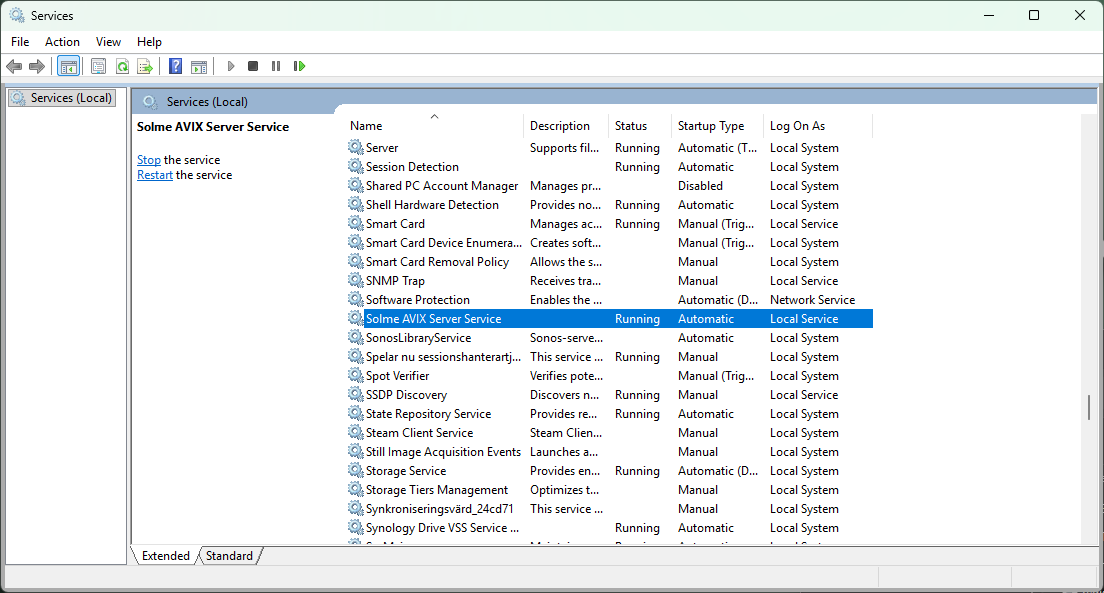
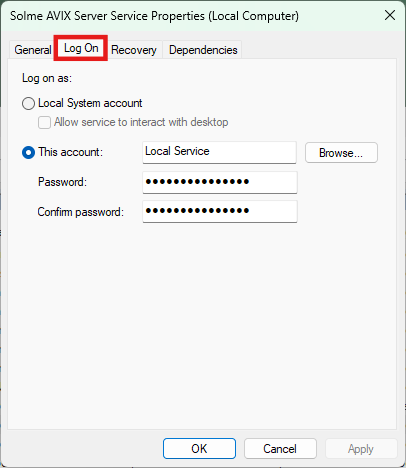
Open the properties for the service from its context menu or by double clicking on it. Switch over to the "Log On" tab. On this page it is possible to assign a new user account.
If account is changed, restart the service.
Using the Solme AviX Server Service Manager Application
In the /commons-daemon/ folder at the root of the AVIX Server installation, there is an application SolmeAviXServer.exe.
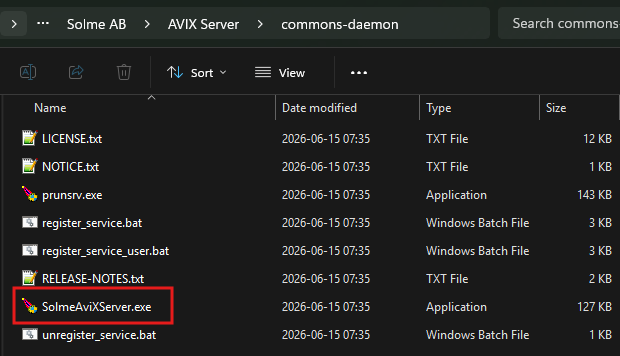
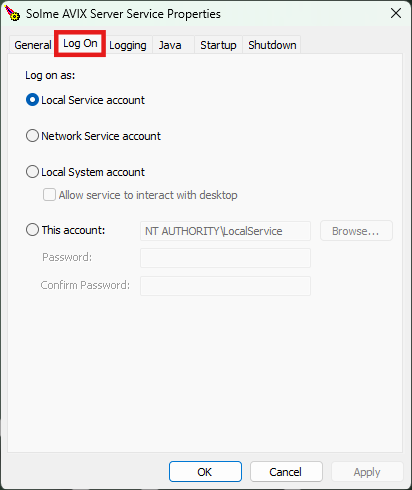
Run this application, you may will need to allow elevated access. Switch to the Log On tab. On this page it is possible to assign a new user account.
If account is changed, restart the service.
error 1069 and how to resolve
There are different causes when you may receive an 1069 error once you have changed the "Log On" user and re-started the AVIX Server Service.
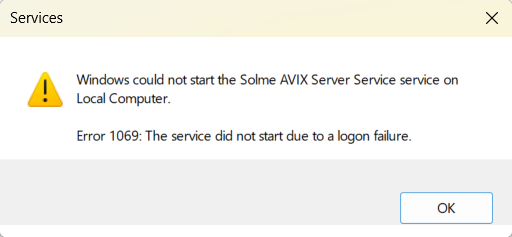
Unfortunately, the error message doesn't give much away, so make sure to verify the following.
Bad password
One obvious cause may be that an incorrect password was provided when changing the "Log On" user account. Make sure the correct password was provided.
missing privilege to start a service
Another cause may be that the user account you are trying to use doesn't have the Log on as a service privilege.
To verify whether the user account has the privilege, open the Group Policy Editor:
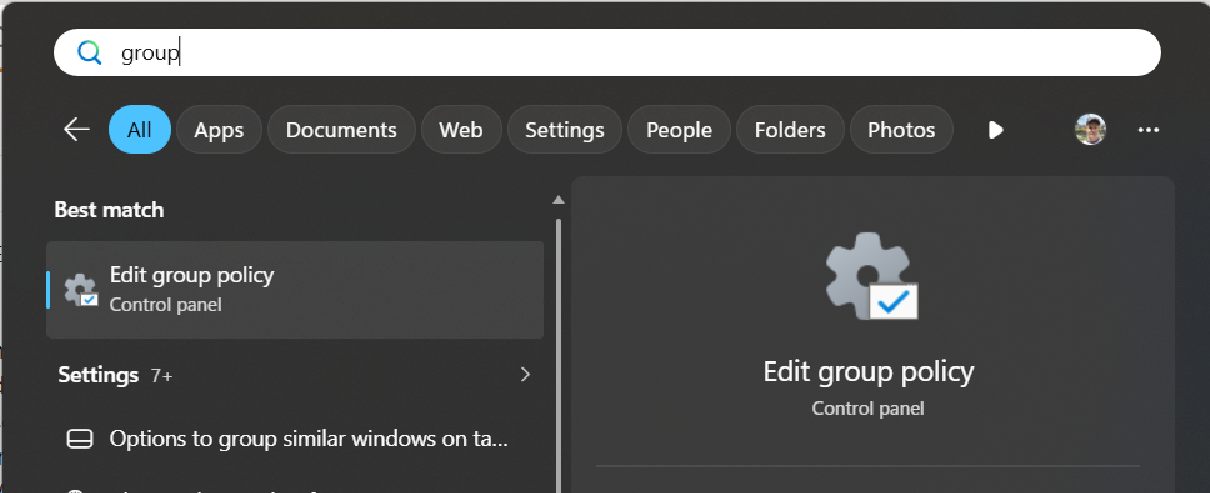
Once there, open the Properties for the policy
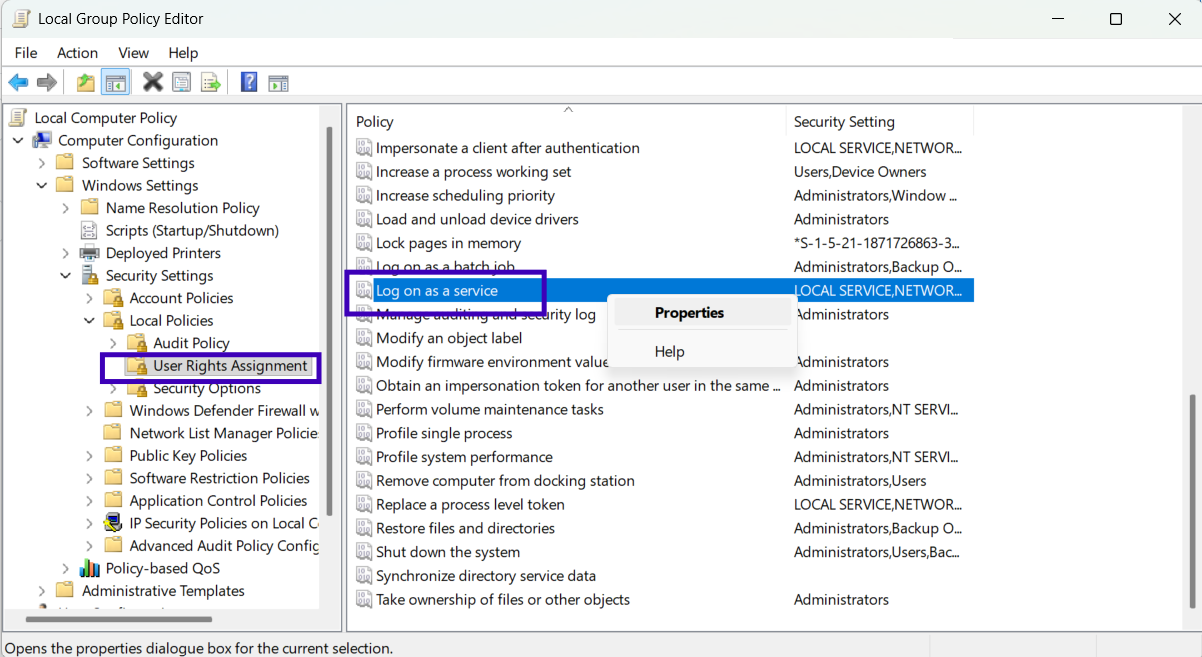
and make sure the user account in question is assigned to the policy.
Also double-check that the "Deny log on as a service" policy does not contain the user, or a group the user belongs to (like Users or Guests)
checklist to resolve 1069 and log-on issues
1 Test User Account credentials
Enter the password for DOMAIN\username:.
Type/paste the password (the text won't show), and hit Enter
Result:
1326: Logon failure: unknown user name or bad password: The password or username format is incorrect.
Note that in Windows, you may use any of these forms:
The dot (.) is simply built-in Windows shorthand for the local machine.
If the test result was successful, you can move on to step 2: the username and password are correct for a local account.