
SQL Server setup
SQL Server port
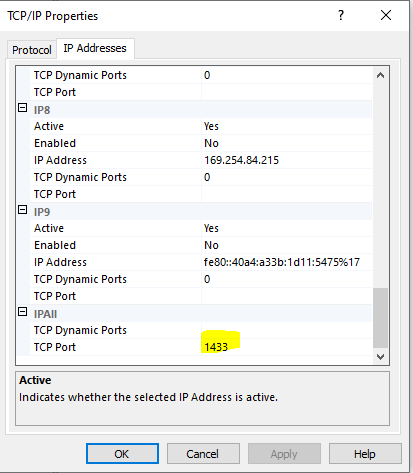
To1433 enable the AVIX server to run time-scheduled jobs, you will need to configureis a coupledefault port. Below, it is assumed that 1433 is used, but that may of directivescourse inbe the preference file.changed.
Furthermore,Assert sincethat theyou're aimrunning isSQL Server on port 1433, that the AVIXservice serveris willrunning performand queries vs. Directory Service (e.g. Active Directory),that you willdon't needhave a firewall blocking incoming connections. So, really check that TCP/IP protocol is enabled in your local SQLEXPRESS instance:
- Open "Sql Server Configuration Manager"
- Expand "SQL Server Network Configuration"
- Go to
submit"ProtocolsuserforcredentialsSQLEXPRESS" - Make sure that
youTCP/IPhaveisaenabledpreference-
"configuration/se.solme.avix.prefs"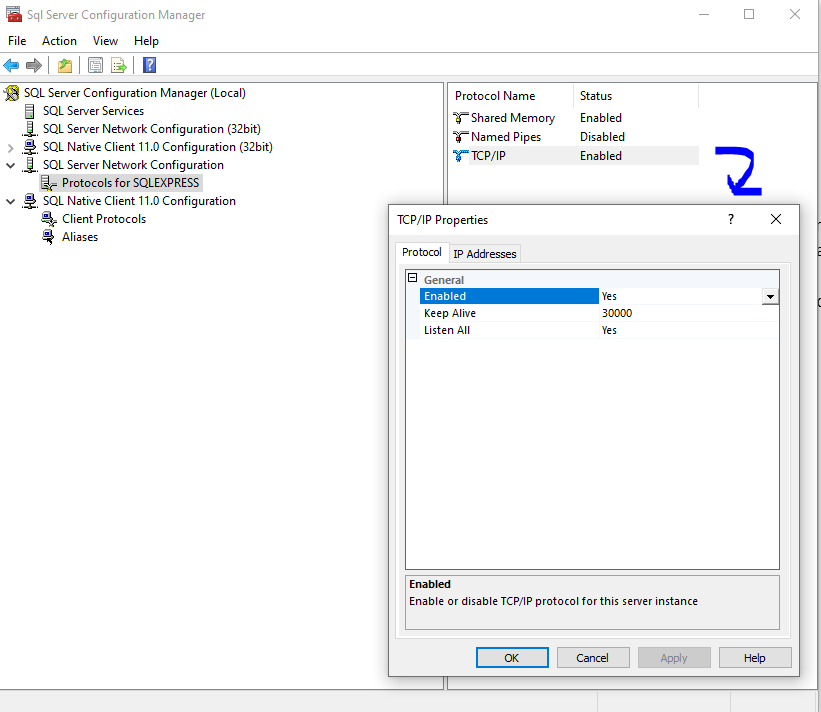
in
file -
- Port settings:
-
quartz scheduling preferences
SQL Server browser
Another point to check might be the installation path ofwhether the server.SQL NowServer addBrowser the following preference keys:
[se.solme.avix.scheduling]
# Whether Quartz scheduler should be enabled. Defaultservice is false.
# This needs to be enabled, to make Cron scheduling work (e.g. for LDAPUserGroups that are synced from ActiveDirectory)
avix.quartzscheduler.enable = true

[se.solme.avix.security.storage]
# Cron expression for when the Storage scanning (a job that goes through loaded storage, and finds objects of interest that have sync configuration) will be triggered.
# The default is "0 0 * * * ?", which means fire every hour.
# Note that the pref 'avix.quartzscheduler.enable' needs to be enabled too.
# Below example read: Fire every 2 minutes.
avix.scheduler.storagescan.cronexpr = 0 0/2 * * * ?
As seen in the comments, the "enable" preference has to be set to true. The "cronexpr" example value is set to fire every 2 minutes, which is good for testing purposes when you want to see the effect pretty quickly. In a real-world production scenario, this is likely to be too frequent.running:
Your AVIX server will need restarting, if you make any changes to the configuration file.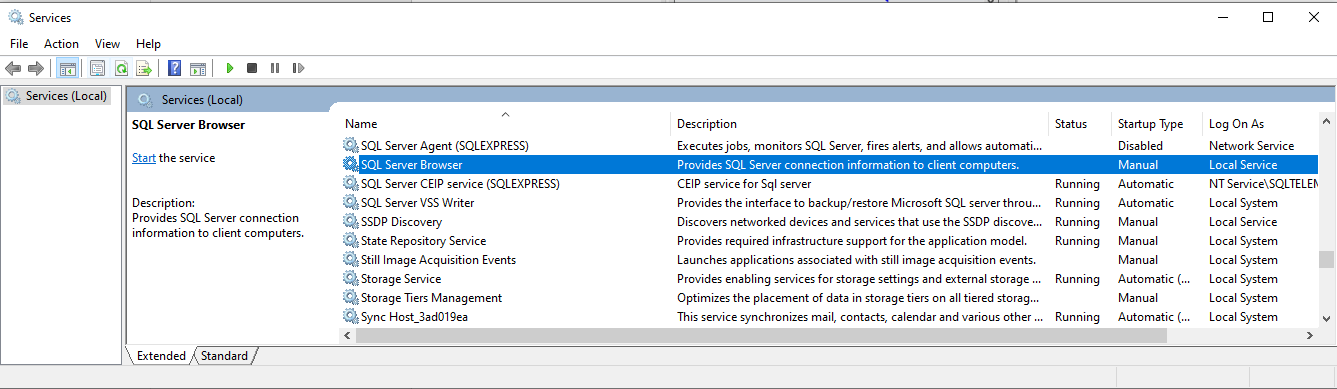
USER CREdentials
Put a text file "auth.txt" in the root directory of the server installation. In this file, add credentials (domain, user name, password) using either of these forms:
domain/user,password
domain,user,password
Since this file contains confidential credentials, it is advisable that you assign the appropriate security permissions to it. The user running the AVIX server service will need Read permission to it.