
Import Plants, Parts, Processes, Tools and variant codes
Almost anything related to the necessary dataset can be imported from Excel to AVIX. In AVIX there’s a built-in wizard to import from Excel (.xls/.xlsx).
Watch video: Import variant codes
Watch video: Import tools and parts
Following steps below is the same regardless of what is beeing imported!imported.
This is howHow it works:
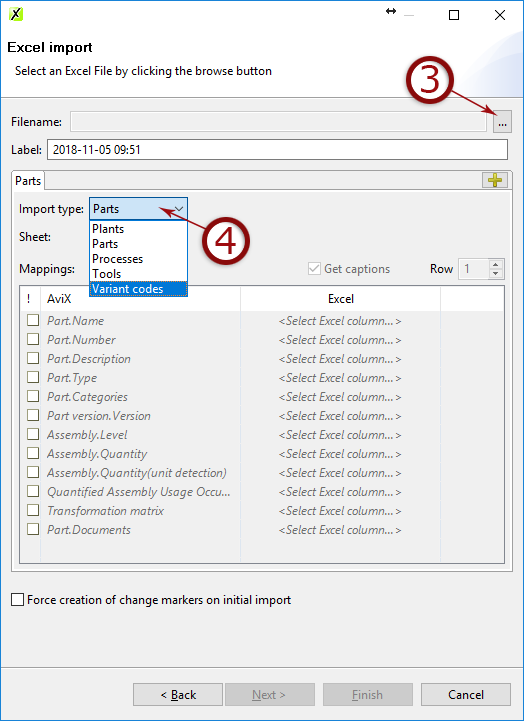
- Click menu File → Import
- Select Excel file import and click next.
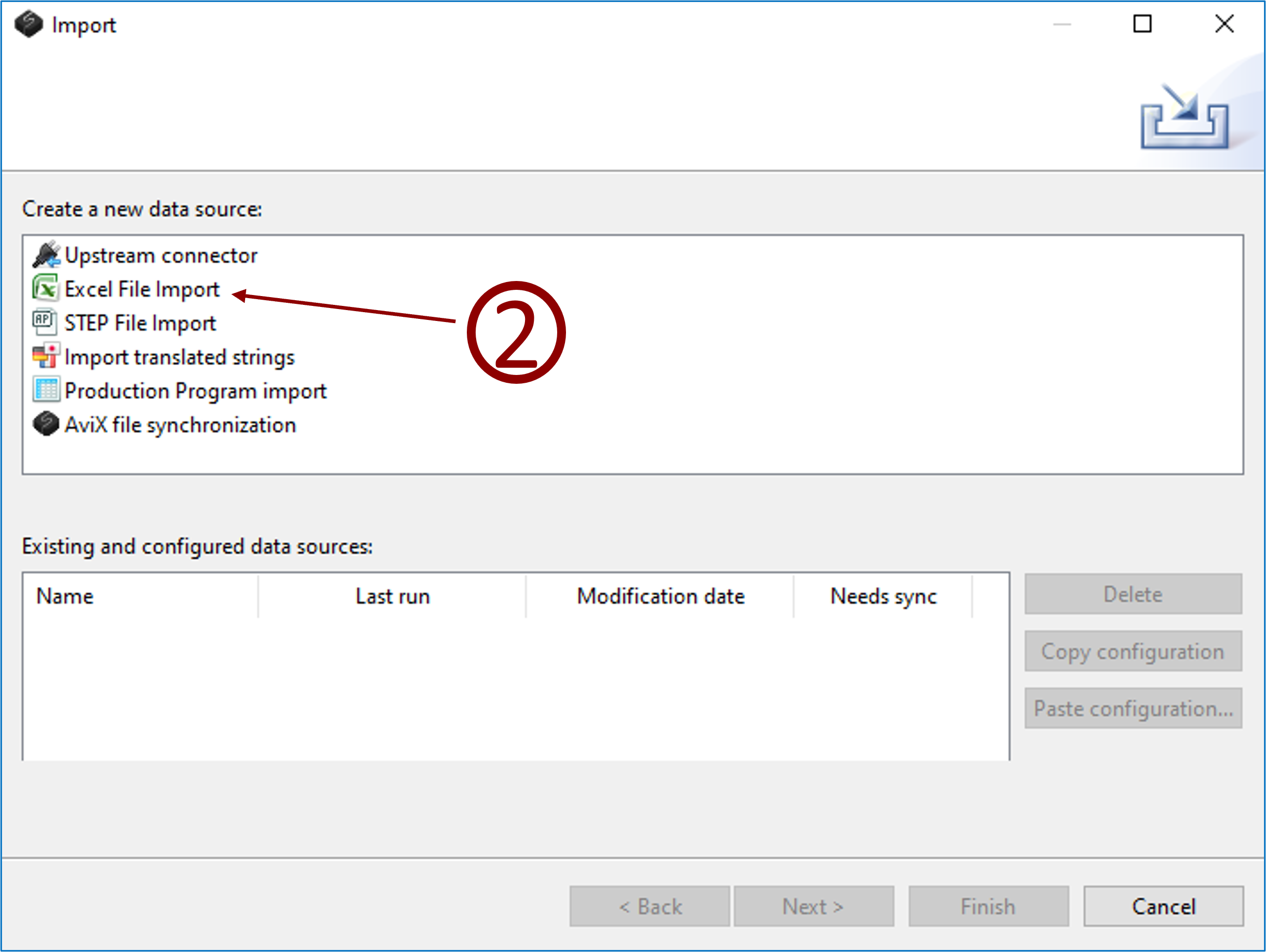
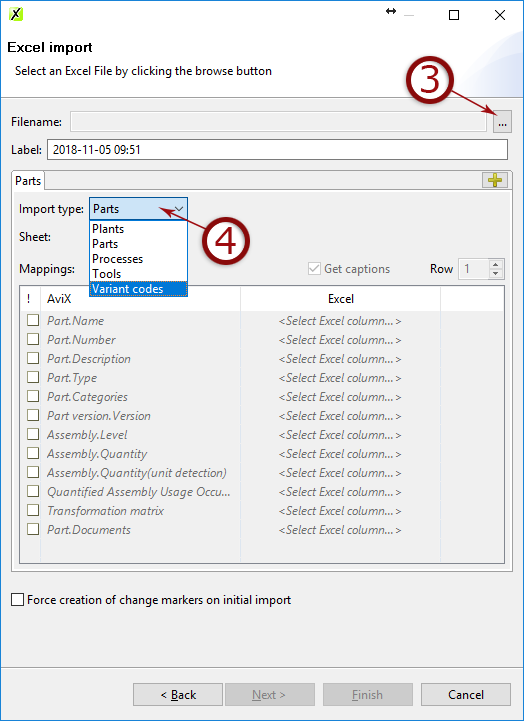
- Select the Excel document where your data is stored
- Select what to import and click next.
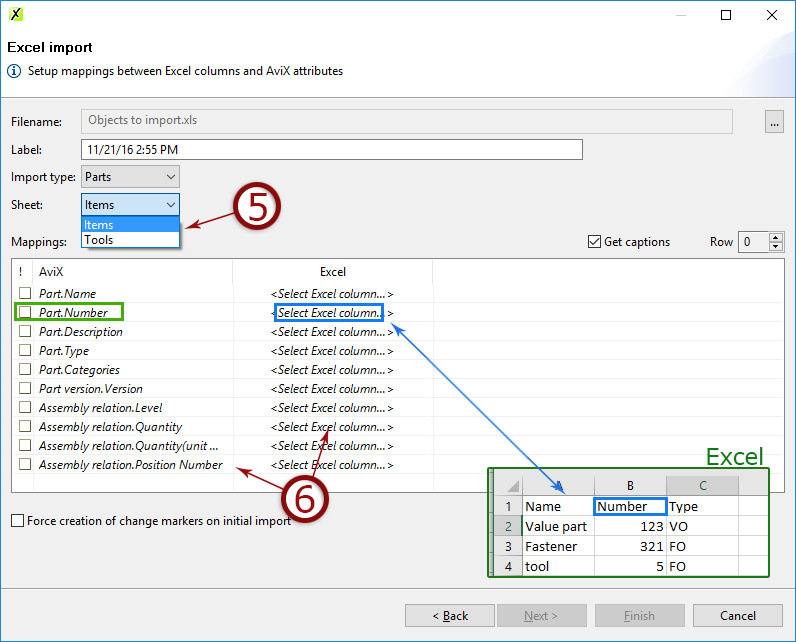
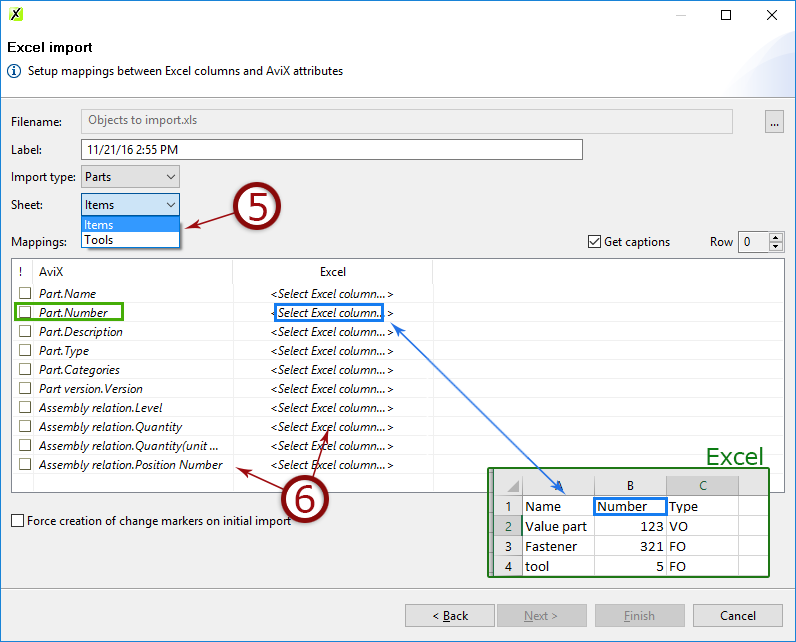
- Select the sheet from Excel document that contains the data
- Map the fields containing data
- Click next to see a preview or click finish.
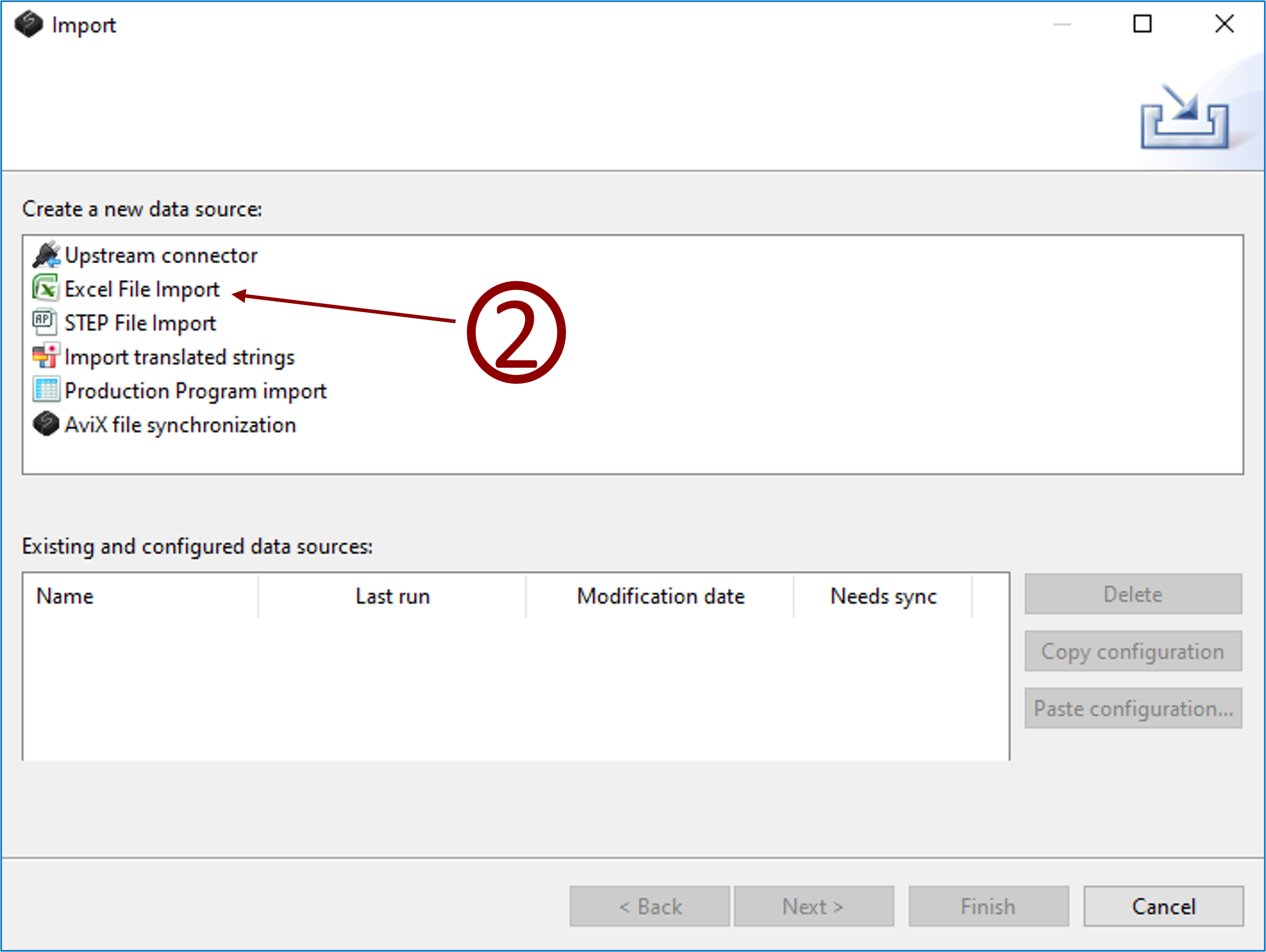
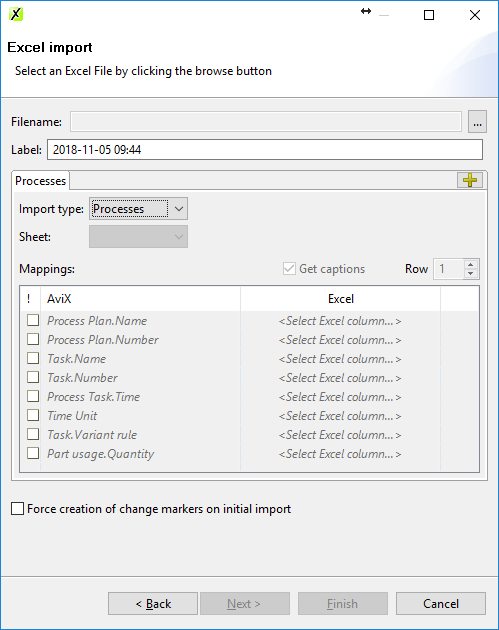
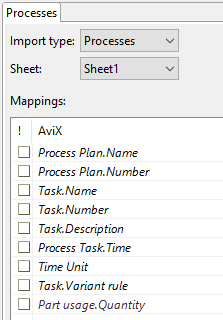
The8. way of importing process steps/tasks/time is the same as for parts and tools. Use the menuFile → Import → Excel File Import
Follow the wizard and map the data in AviX to the columns in Excel.Done! Done!
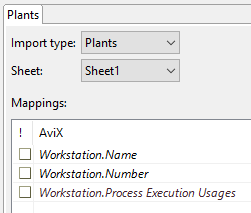
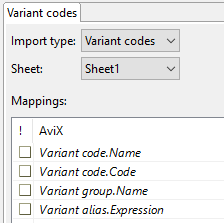
Following are the propertiesProperties for all import types that can be imported via Excel:Excel is listed below:
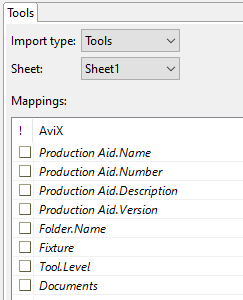
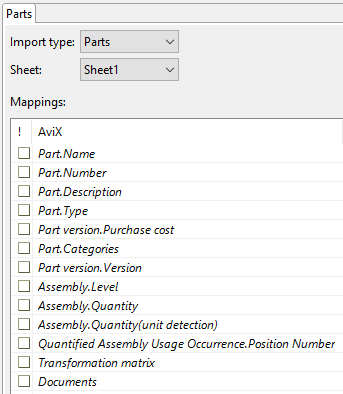
WhenDocuments importing parts/toolsand images linked(also linked) can also be imported.imported to parts and tools. This is done by adding the source of the image, e.g. c:\images\hammer.jpg.
Multiple images can be imported by separating the link using a semi-colon (;) e.g. c:\images\hammer1.jpg;c:\images\hammer2.jpg
