Re-evaluating & comparing two designs
After the initial DFX analysis of a certain MBOM, different activities within the different disciplines (e.g. purchase, design) might have resulted in a proposed re-design of the product. It is thus a logical step to compare the “DFA index” for the original MBOM with the new re-designed one.
Re-evaluating new design
As per methodology
COMPARING DFA SCORES
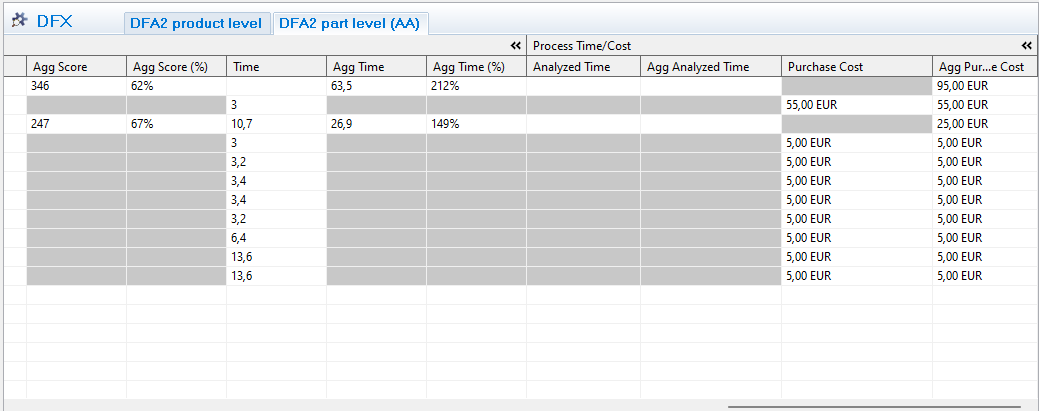
When comparing two designs it is noticeably that an improved design might have a lower DFA score than the original design. This is because eliminating a part will reduce the total score, making it difficult to compare designs using the DFA-score (Aggregated score) itself.
When comparing two designs, you can:
Use the theoretical DFA-time
Compare the total number of parts.