
Background
- AVIX DFAA (DFA2) is based on a collection of DFA aspects (rules), with focus on optimizing design for automatic assembly, hence DFAA
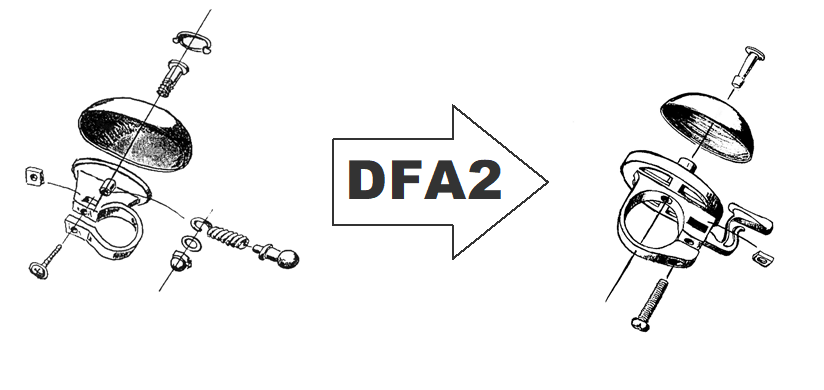
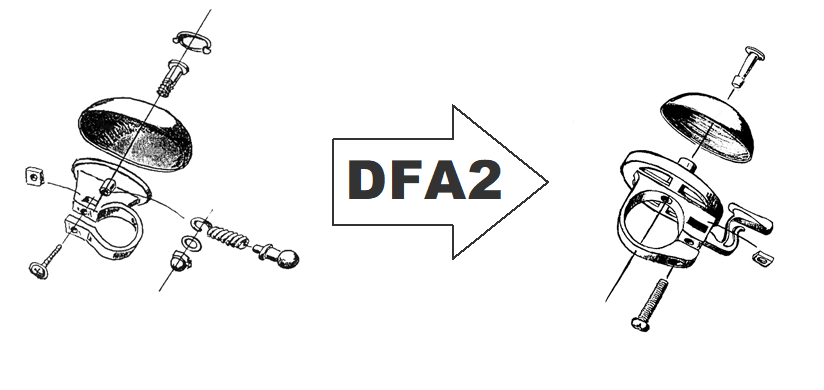
- The basic idea is that optimizing design for automatic assembly (robots) will also provide good conditions for humans (e.g. humans have a wider degree of freedom)
- Both DFA and DFAA can be done using AVIX (choice of template for DFA aspects)
- AVIX DFAA is based on a close collaboration between academia and a number of industries in a project from the KTH Royal Institute of Technology in Sweden. It was based on a wide range of industries:
-
- Consumer products and industrial products
- Mechanical products and electronic products
- High volume manufacturing and low volume manufacturing
- Manual assembly and automatic assembly
-
- A DFAA in AVIX can be done at product level (e.g. number of parts, modularization) and at part level (e.g. need to assemble part?)For more introduction about the DFAA (DFA2) methodology:
https://kth.diva-portal.org/smash/get/diva2:8891/FULLTEXT01.pdf
DFA2 method support
At present, there is support for the DFA2 method within the AVIX DFX module. This can be seen in the two tabs above the analysis windows. (se below)
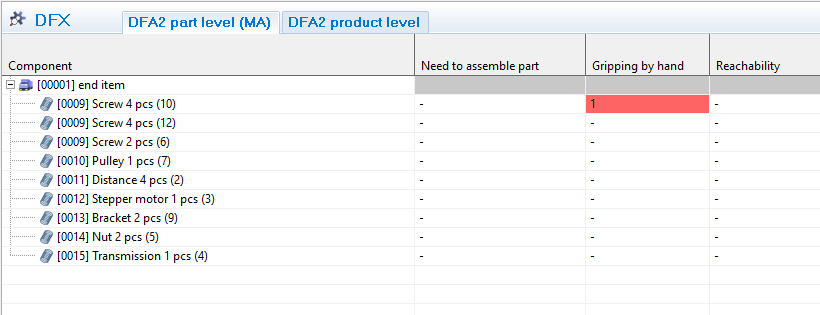
Here we find the two existing DFA2 analysis types that can be carried out in AVIX: DFA2 product level and DFA2 part level.